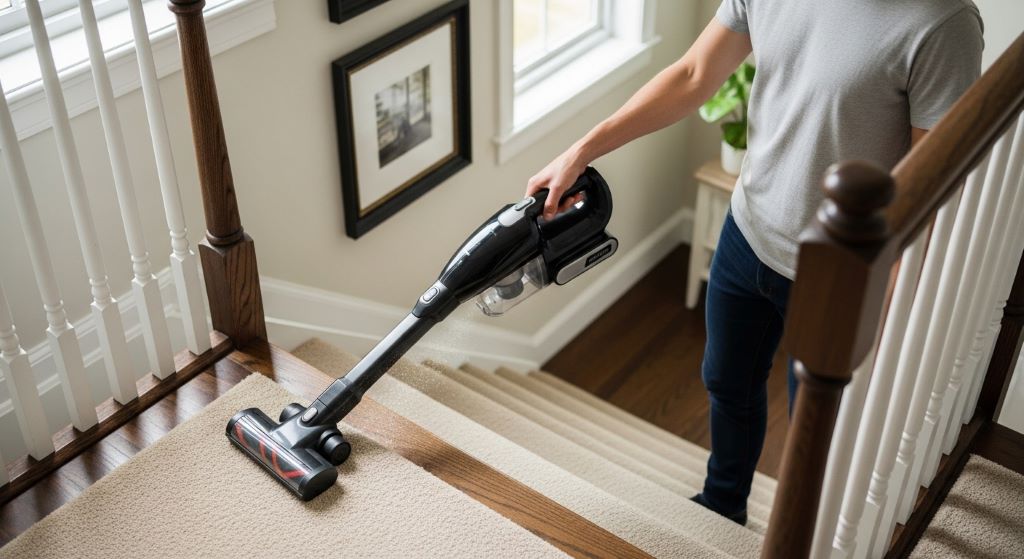
How to Clean Carpeted Stairs with the Right Vacuum Cleaner
Carpeted stairs are one of the most overlooked areas in any home. People vacuum their living rooms and bedrooms regularly. However, the stairs often get skipped because they feel awkward and time-consuming to clean. Dirt, pet hair, and dust settle deep into stair carpet fibers with every footstep. Over time, this buildup can make your stairs look dingy and even affect the air quality in your home.
The good news is that cleaning carpeted stairs does not have to be a difficult chore. With the right approach and the right tools, you can get the job done quickly and thoroughly. This guide will walk you through everything you need to know, from choosing the best vacuum cleaner to mastering the correct technique for each step.
Why Carpeted Stairs Collect More Dirt Than You Realize
Think about how many times you walk up and down your stairs each day. Every trip tracks in particles from outside, redistributes dust from inside, and grinds debris deeper into the carpet fibers. Unlike flat floor carpets, stair carpet experiences concentrated foot traffic in exactly the same spots every single time.
The edges and corners of each step are especially problematic. Dust and pet hair collect in the crevice where the tread meets the riser. This is a spot that most standard vacuum cleaner attachments cannot reach easily. Additionally, carpet fibers on stairs tend to mat down faster due to repeated pressure, which traps particles even more effectively.
Therefore, cleaning carpeted stairs requires both the right equipment and a deliberate technique. A quick pass with a full-size upright vacuum simply will not do the job well. You need tools designed to access tight angles and lift embedded debris from dense carpet.
Choosing the Right Vacuum Cleaner for Stairs
Not all vacuum cleaners are created equal when it comes to stair cleaning. The size, shape, and attachments of your vacuum make a significant difference in the results you get. Here is what to look for when selecting the best machine for the job.
Corded vs. Cordless Vacuums
Corded vacuums typically offer more consistent suction power. However, managing a power cord on a staircase can be tricky and even dangerous. A cord trailing behind you creates a trip hazard, especially when you are moving backward down the stairs.
Cordless vacuums eliminate this risk entirely. Modern cordless models have improved significantly in recent years. Many now deliver suction power that rivals corded options. Additionally, they are faster to grab and use, which means you are more likely to clean your stairs often.
Upright, Canister, or Handheld
Upright vacuums are not ideal for stairs. They are heavy, bulky, and hard to maneuver step by step. Canister vacuums work better because the motor unit stays on the step while the hose and attachment do the work. However, they still require careful handling.
Handheld vacuums are often the most practical option for stairs. They are lightweight and easy to direct into corners and edges. A compact vacuum with strong suction and a motorized brush attachment is ideal for carpet. These smaller machines are specifically designed for tight spaces, and stairs are a perfect application.
Suction Power and Brush Rolls
Suction alone is not enough for carpeted stairs. You also need a brush roll or beater bar to loosen embedded dirt and hair from the carpet fibers. Look for a vacuum that includes a motorized brush attachment rather than a simple suction nozzle.
Additionally, adjustable suction settings are helpful. High suction on thick carpet keeps the attachment firmly in place. Lower suction works better on thinner stair runners that might otherwise get sucked up into the nozzle.
Essential Attachments for Stair Cleaning
The attachments that come with your vacuum can make a bigger difference than the vacuum itself. Here are the key tools to look for:
- Motorized mini brush head: This is the most useful stair attachment available. The rotating brush loosens pet hair and dirt that suction alone cannot remove. It fits on each step easily and reaches the back of the tread.
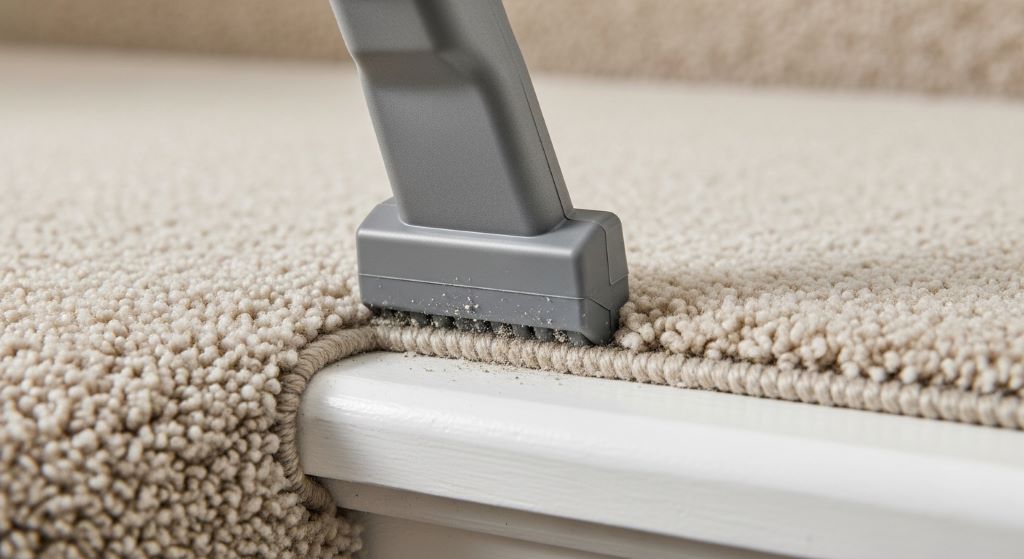
- Crevice tool: The narrow, angled tip of a crevice tool is perfect for the gap between each tread and riser. This is where the most stubborn debris accumulates. Running the crevice tool along this seam before vacuuming the main surface makes a noticeable difference.
- Upholstery brush: A soft bristle upholstery brush is gentle on carpet while still loosening surface dust. It is a good option for a quick maintenance clean between deeper sessions.
- Extension hose: A longer hose lets you keep your canister or main unit on a stable step while you reach several steps in each direction. This reduces how often you need to reposition the machine.
Having all of these easy cleaning tools within reach before you start makes the process faster and more effective. Lay them out at the top of the staircase before you begin so you do not have to stop and search mid-task.
How to Prepare Your Stairs Before Vacuuming
A little preparation goes a long way. Taking a few minutes before you start vacuuming will make the whole process easier and produce better results.
Remove All Objects from the Stairs
Take everything off the stairs first. Shoes, bags, books, and toys all need to go. This gives you clear access to every step and prevents you from accidentally vacuuming up something that should not be sucked in.
Pre-Treat Visible Stains
If you notice any stains, apply a carpet cleaning spray and let it sit for a few minutes before vacuuming. This helps break down the stain particles so they lift more easily. However, make sure the carpet is not soaking wet before you vacuum, as excess moisture can damage your machine.
Use a Rubber Brush or Lint Roller for Pet Hair
If you have pets, go over each step with a rubber bristle brush or a lint roller before vacuuming. Pet hair tangles into carpet fibers and resists suction. Loosening it first with a manual tool allows the vacuum to pick it up much more effectively.
Additionally, wearing rubber gloves and running your hand firmly along each step can pull up surprising amounts of pet hair that a vacuum would otherwise miss.
The Best Technique for Vacuuming Carpeted Stairs
Technique matters just as much as equipment. Even the best vacuum will underperform if you rush through the process. Here is a step-by-step method that delivers consistently clean results.
Start at the Top and Work Down
Always begin at the top step and work your way down. This is important for two reasons. First, it keeps you facing the stairs in a natural, stable position. Second, any loosened dirt that falls from an upper step lands on a lower step that you have not yet cleaned.
Additionally, starting at the top means you can step backward safely onto already-cleaned steps as you descend. This prevents you from tracking fresh dirt back onto clean carpet.
Clean the Crevices First
Before vacuuming the main surface of each step, run the crevice tool along the seam between the tread and riser. Work from one side to the other in a single smooth pass. This dislodges the densely packed debris that accumulates in that tight gap.
Then vacuum the sides of each step where the carpet meets the wall or banister. These edges collect hair and lint that the main brush head often misses.
Vacuum the Tread Surface Thoroughly
Use your motorized brush attachment to clean the flat surface of each tread. Move the attachment slowly and make multiple overlapping passes. Rushing leaves debris behind, especially on high-traffic areas near the center of the step.
Push the attachment slightly into the back edge of each tread so the brush reaches as far as possible into the carpet. This is the area that wears fastest and traps the most dirt.
Do Not Forget the Risers
If your risers are also carpeted, vacuum them with an upholstery brush or the main brush head held vertically. Risers collect less dirt than treads, but they still gather dust and pet hair. Cleaning them gives the entire staircase a finished, thorough look.
How Often Should You Clean Carpeted Stairs?
Frequency depends on how much foot traffic your stairs receive and whether you have pets or children. However, a general rule of thumb is helpful for most households.
Vacuum high-traffic stairs at least once a week. If you have pets that shed, consider vacuuming every three to four days. Light-use staircases can be cleaned every ten days to two weeks without significant buildup occurring.
Additionally, do a deeper clean every one to two months. This includes pre-treating stains, using a rubber brush on the carpet fibers, and cleaning the risers as well as the treads. A deeper clean also extends the life of your carpet significantly.
Therefore, consistency matters more than intensity. Vacuuming briefly every few days is more effective than an occasional thorough session with long gaps in between.
Tips for Maintaining Clean Stairs Between Vacuum Sessions
A compact vacuum is ideal for quick touch-ups between full cleaning sessions. Keep it charged and accessible so you can grab it whenever you spot fresh debris on the stairs.
Here are some additional habits that help keep your stairs cleaner for longer:
- Place a doormat at the base of the stairs to catch dirt before it gets tracked up. Similarly, a mat at the top landing traps debris coming down from upper floors.
- Establish a no-shoes policy on the stairs. Shoes bring in the majority of outdoor dirt. Removing them at the door dramatically reduces how quickly carpet gets dirty.
- Groom pets regularly. Less shedding means less hair embedded in your stair carpet. Brushing pets outdoors or in an easy-to-clean area keeps the hair away from fabric surfaces.
- Use stair runners or carpet protectors on high-traffic areas. These protect the underlying carpet from wear and can be removed and washed separately.
These simple habits reduce the workload significantly. Therefore, you spend less time cleaning and more time enjoying a fresh, tidy home.
When to Deep Clean and When to Call a Professional
Regular vacuuming handles everyday dirt effectively. However, there are times when a deeper approach is necessary. If your carpet has ground-in stains, persistent odors, or visible matting that vacuuming cannot correct, it is time for a more intensive clean.
Carpet cleaning machines that use hot water extraction can be rented from most hardware stores. These machines flush water and cleaning solution deep into the carpet fibers and extract it along with the embedded dirt. They are highly effective on stairs when used with the right stair attachment.
However, if the carpet is old, heavily stained, or showing significant wear, professional cleaning may be the better choice. Professional cleaners have industrial equipment and specialized solutions that achieve results difficult to replicate at home.
Additionally, professional cleaning can help restore carpet that looks beyond saving. If you are considering replacing stair carpet purely for cosmetic reasons, a professional clean first might save you a considerable amount of money.
Conclusion
Cleaning carpeted stairs is far less daunting than most people think. With the right vacuum cleaner, the correct attachments, and a consistent technique, you can keep your stairs looking clean and fresh with minimal effort.
Start by choosing a vacuum suited to stairs, whether that is a lightweight handheld model or a canister with a long hose. Make sure you have key attachments including a crevice tool and a motorized brush head. Prepare the stairs before you begin and always work from the top step down.
Vacuum high-traffic stairs at least weekly, and supplement your routine with good habits like doormats, no-shoe policies, and regular pet grooming. Additionally, schedule a deep clean every month or two to maintain carpet health and appearance.
Your staircase is one of the most visible areas of your home. Keeping it clean leaves a great impression and contributes to a healthier indoor environment for everyone in the house. With the right approach, it is a task you will barely notice.
Frequently Asked Questions
1. What type of vacuum is best for carpeted stairs?
A lightweight cordless handheld vacuum or a canister vacuum with a long hose and motorized brush attachment works best. These types offer the maneuverability and suction needed for tight stair spaces. Upright vacuums are generally too bulky and difficult to use safely on stairs.
2. How do I remove pet hair from carpeted stairs effectively?
First, loosen the hair manually using a rubber bristle brush or rubber gloves. Then vacuum with a motorized brush attachment, which agitates the carpet fibers and lifts embedded hair. A crevice tool helps remove hair from the gap between the tread and riser.
3. Is it safe to vacuum stairs with a corded vacuum?
It can be done safely, but extra care is required. Keep the cord behind you and avoid letting it trail across the steps you are standing on. Many people prefer cordless options specifically to eliminate this safety concern. If using a corded vacuum, work slowly and be aware of where the cord is at all times.
4. How do I clean the edges and corners of carpeted stairs?
Use a crevice tool attachment for the seam between the tread and riser. Run it firmly along the full width of each step. For the corners where the carpet meets the wall, a small upholstery brush or the crevice tool works well. These areas require extra attention because debris concentrates there.
5. How can I stop my stair carpet from getting dirty so quickly?
Place mats at the top and bottom of the staircase to trap incoming dirt. Encourage a no-shoes policy in the home. Groom pets regularly to reduce shedding. Additionally, vacuum more frequently during high-traffic periods such as winter months when people track in more dirt from outside. Consistency is the most effective defense against rapid dirt buildup.
Related Topics:
How to Fix a Clogged Steam Cleaner: A Comprehensive Guide
How to Clean a Deck Without a Power Washer









Post Comment