How to Buy a Cheap Robotic Pool Vacuum That Actually Works
A cheap robotic pool vacuum is an automated cleaner priced affordably (typically under $300–$500) that can independently scrub and collect debris—but the key is choosing one with strong suction, reliable navigation, and durable build quality.
Buying a robotic pool vacuum cheap sounds easy—until you actually try it. You scroll through listings, see dozens of “budget-friendly” options, and every single one promises powerful cleaning, smart navigation, and zero effort. Then reality hits. Weak suction. Random movement. Missed spots. A device that looks like a bargain but turns into wasted money.
Here’s the truth: most cheap robotic pool vacuums don’t fail because they’re cheap—they fail because buyers don’t know what to look for. A low price doesn’t automatically mean poor performance. But ignoring critical features like suction power, filtration system, and navigation technology almost guarantees disappointment.
A robotic pool vacuum cheap, when chosen correctly, can save hours of manual cleaning, reduce chemical use, and maintain consistent water clarity. The difference between a smart purchase and a frustrating one comes down to understanding what actually matters—and what is just marketing noise.
This guide breaks down exactly how to buy a cheap robotic pool vacuum that works, without falling for gimmicks or overpaying for features you don’t need.
What features matter most when buying a cheap robotic pool vacuum?
The most important features are suction power, filtration quality, coverage pattern, and build durability—these determine whether the vacuum actually cleans or just moves around.
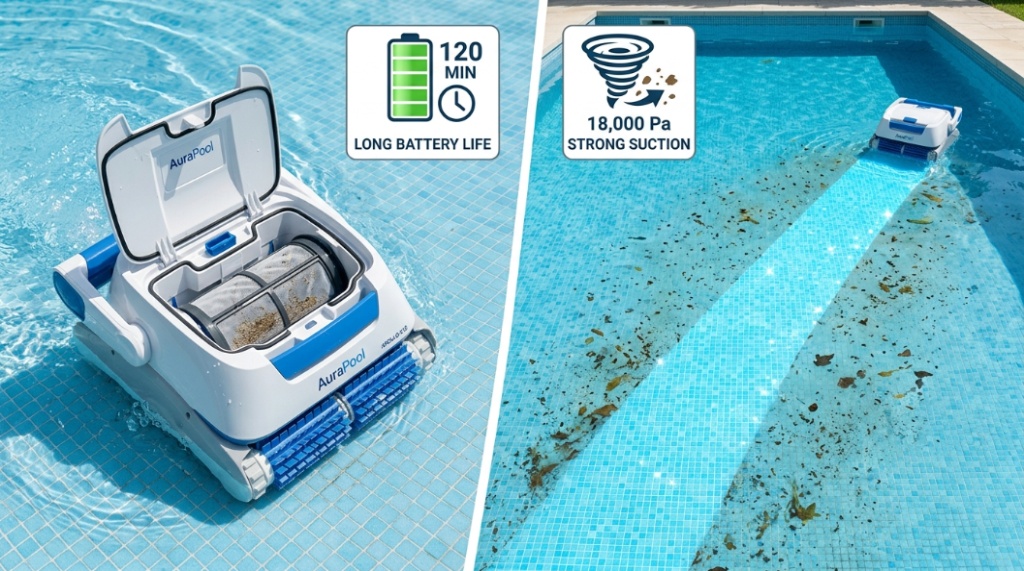
Key features you should never compromise on
- Suction power: Look for at least 15–20 GPM (gallons per minute) equivalent performance.
- Filtration system: Fine filters capture sand and algae; basic ones only handle leaves.
- Navigation pattern: Random movement wastes time and misses areas.
- Wall climbing ability: Essential for full pool cleaning.
- Cycle time: Ideal range is 1.5–2.5 hours.
Budget models often cut corners in navigation and filtration. If you prioritize those two, you’ll eliminate most poor-performing options immediately.
Are cheap robotic pool vacuums actually worth it?
Yes, but only if you choose models designed for efficiency rather than stripped-down versions of premium products.
According to industry estimates, robotic pool cleaners can reduce manual cleaning time by up to 70%. Even budget models deliver noticeable improvements compared to manual vacuuming or suction-side cleaners.
However, cheap models become “not worth it” when:
- They rely on weak motors
- They lack proper filtration
- They use inefficient cleaning patterns
The goal isn’t to find the cheapest option—it’s to find the lowest price point that still delivers consistent cleaning performance.
What is the ideal price range for a good budget robotic pool vacuum?
The sweet spot for a reliable robotic pool vacuum cheap is typically between $200 and $400.
| Price Range | What You Get | Recommendation |
|---|---|---|
| Under $150 | Basic suction, random movement | Avoid unless for very small pools |
| $200–$300 | Decent cleaning, limited navigation | Good for small to medium pools |
| $300–$400 | Better suction, improved coverage | Best value zone |
| $400+ | Advanced features, smart navigation | Optional upgrade |
Most buyers get the best performance-to-cost ratio in the $300 range.
How do robotic pool vacuums work?
Robotic pool vacuums operate independently using built-in motors to move, scrub surfaces, and filter debris without relying on your pool’s pump system.
Unlike suction-side cleaners, robotic units have their own filtration system and internal motors. This means:
- They reduce strain on your pool pump
- They consume less energy overall
- They provide more consistent cleaning
Some advanced models use sensors and algorithms to map the pool, but many cheap versions rely on random movement patterns.
Do cheap robotic pool vacuums clean as well as expensive ones?
They can clean just as well for basic tasks, but they lack efficiency, smart navigation, and advanced filtration.
Expensive models often include:
- Smart mapping technology
- App control and scheduling
- Multi-layer filtration systems
Cheap models, however, can still:
- Remove leaves and debris effectively
- Clean pool floors consistently
- Handle routine maintenance
If your pool is standard in shape and not heavily contaminated, a budget robotic cleaner can perform surprisingly well.
What are the most common mistakes when buying a cheap robotic pool vacuum?
The biggest mistake is focusing only on price instead of performance-critical features.
- Ignoring suction specs: Weak motors lead to poor cleaning.
- Buying unknown brands: Lack of support and spare parts.
- Overlooking filter type: Fine debris won’t be captured.
- Choosing random navigation: Leads to incomplete cleaning.
- Skipping warranty: Risk of early failure.
A cheap purchase becomes expensive if you have to replace it quickly.
What type of pool works best with budget robotic vacuums?
Budget robotic pool vacuums perform best in small to medium-sized pools with simple shapes and minimal obstacles.
Ideal conditions include:
- Flat or slightly sloped floors
- Minimal steps or corners
- Light to moderate debris
Complex pool designs require smarter navigation, which is usually found in higher-end models.
How long should a cheap robotic pool vacuum last?
A well-built cheap robotic pool vacuum can last 2–4 years with proper maintenance.
Lifespan depends on:
- Motor quality
- Filter maintenance
- Usage frequency
- Water conditions
Regular cleaning of filters and proper storage can significantly extend lifespan.
Is it better to buy cordless or corded budget models?
Corded models are generally more reliable and powerful, while cordless models offer convenience but often compromise performance.
Corded advantages:
- Stronger suction
- Longer cleaning cycles
- Consistent performance
Cordless advantages:
- No tangling issues
- Easy handling
- Portable design
For budget buyers, corded models usually deliver better value.
How do you maintain a cheap robotic pool vacuum?
Regular cleaning of filters, checking brushes, and proper storage are essential to keep a budget robotic vacuum working efficiently.
- Clean filter after every use
- Rinse debris compartments thoroughly
- Check for tangled debris in brushes
- Store in a shaded, dry area
- Avoid leaving it in chlorinated water for long periods
Maintenance is what separates a 1-year device from a 4-year investment.
Conclusion
A robotic pool vacuum cheap can absolutely work—if you choose based on performance, not price alone. The difference between a frustrating purchase and a smart investment comes down to understanding the essentials: suction power, filtration, navigation, and durability.
You don’t need premium features to keep your pool clean. You need reliability. A well-selected budget model can handle routine cleaning, reduce manual effort, and maintain clear water without draining your wallet.
If you’re serious about getting value, focus on the $200–$400 range, avoid unknown brands, and prioritize function over flashy features. That’s how you buy a cheap robotic pool vacuum that actually works.
Make a smarter choice now—and save yourself hours of cleaning later.
FAQ: Cheap Robotic Pool Vacuum Buying Guide
What is the best cheap robotic pool vacuum?
The best option balances suction power, filtration, and durability rather than just having the lowest price.
Can a cheap robotic pool vacuum clean algae?
Yes, but only if it has fine filtration; basic models struggle with very fine particles like algae.
Do robotic pool cleaners use a lot of electricity?
No, most use less energy than traditional pool pump systems, making them cost-efficient over time.
How often should I run my robotic pool vacuum?
2–3 times per week is sufficient for most pools to maintain cleanliness.
Are cheap robotic pool vacuums safe for all pool types?
Most are safe for vinyl, fiberglass, and concrete pools, but always check compatibility.
Do I still need manual cleaning?
Occasional manual cleaning may be required for corners or heavy debris.
What size pool can a cheap robotic vacuum handle?
Most budget models are suitable for pools up to 30–40 feet in length.l.
📌 Related Reads
👉 Don’t miss clean fabric sofa with a vacuum cleaner step by step
👉 Learn how to report home or business incidents online step-by-step











Post Comment