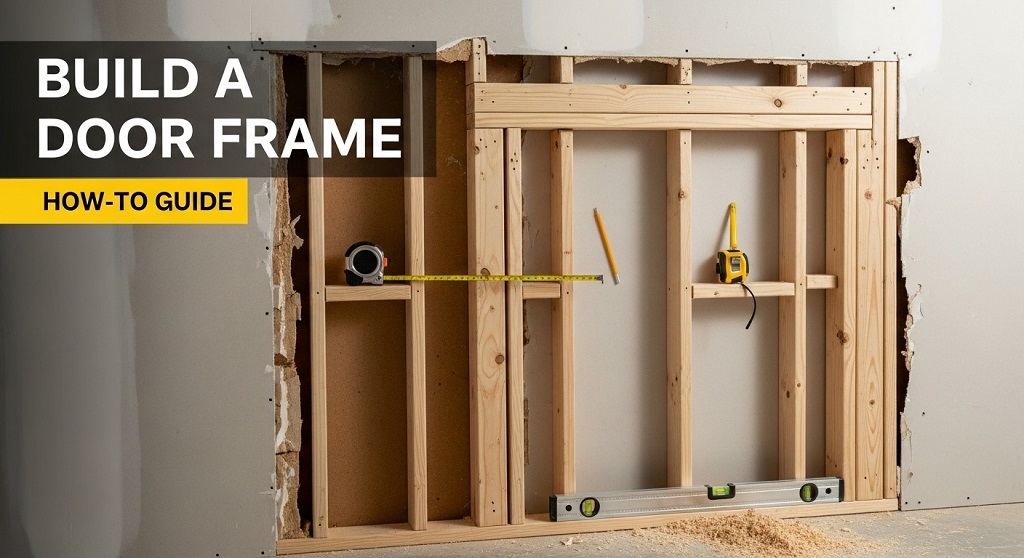
How to Build a Door Frame in an Existing Wall: Complete Step-by-Step Guide for Homeowners
Building a new door frame in an existing wall transforms unused space into functional rooms. Homeowners often add interior doors to create home offices, closets, or private bedrooms. According to the U.S. Census Bureau’s American Housing Survey, over 62% of single-family homes built before 1980 lack adequate interior door configurations for modern living. Moreover, the National Association of Home Builders reports that adding an interior door remains one of the top 15 most popular remodeling projects. This comprehensive guide walks you through every stage safely and accurately.
Why Add a Door to an Existing Wall?
Homeowners choose this project for multiple reasons. First, it increases privacy in open-concept layouts. Second, it improves temperature control between rooms. Third, it boosts home value without major structural changes. Additionally, installing a new doorway often costs less than relocating existing ones. Many people discover load-bearing concerns only after starting, so proper planning prevents expensive mistakes.
Tools and Materials You Need
Gather everything before cutting drywall. Professional carpenters emphasize preparation to avoid multiple store trips.
Essential Tools:
- Tape measure and 4-foot level
- Stud finder with live wire detection
- Circular saw and reciprocating saw
- Hammer and pry bar
- Drill/driver with bits
- Chalk line and carpenter’s square
- Safety gear: dust mask, goggles, gloves
Materials List:
- 2×4 or 2×6 lumber (pressure-treated if near moisture)
- King studs, jack studs, and header material
- Cripples and sill plate (if needed)
- Shims, construction adhesive, and 16d nails
- Prehung door unit or door slab with hinges
- Drywall patches and joint compound

Step 1: Planning and Permitting
Start with accurate planning. Measure the desired rough opening width and height. Standard interior doors require a rough opening 2 inches wider and 2½ inches taller than the door slab. For example, a 32-inch door needs a 34-inch wide opening.
Check local building codes. Some municipalities require permits for new openings, especially if you cut load-bearing walls. Contact your local building department early. Furthermore, locate HVAC ducts, plumbing, and electrical lines using a deep-scan stud finder.
Step 2: Locate and Mark the Opening
Precision matters here. Use the stud finder to mark existing studs on both sides of the proposed doorway. Snap vertical chalk lines for king studs. Then mark the top and bottom plates. Double-check measurements three times. Consequently, small errors compound during installation.
Transfer marks to the opposite side of the wall using a laser level or plumb bob. This ensures the opening stays perfectly vertical on both faces.
Step 3: Determine If the Wall Is Load-Bearing
Never guess. Load-bearing walls run perpendicular to floor joists above. Look for doubled joists, beams, or walls directly above basement support posts. When in doubt, consult a structural engineer. Cutting a load-bearing wall without proper header support can cause catastrophic sagging.
Step 4: Build a Temporary Support Wall (Load-Bearing Only)
Safety comes first. Construct a temporary wall 2–3 feet away from the work area. Use 2×4 studs spaced 16 inches on center with top and bottom plates. Wedge it tightly against the ceiling using adjustable jacks or shims. This distributes weight while you cut the opening.
Step 5: Cut the Drywall
Score drywall with a utility knife along your marks. Then punch through and cut the back paper. Remove drywall carefully in large sections. Save pieces for patching later. Vacuum dust immediately to maintain visibility.
Step 6: Frame the Rough Opening – King Studs and Jack Studs
King studs run full height from bottom plate to top plate. Install one on each side of the opening. Jack studs (or trimmer studs) support the header. Cut jack studs to the height of the door rough opening plus the header thickness.
Nail king studs first using 16d nails in a staggered pattern. Toenail jack studs to the bottom plate and face-nail them to king studs. Ensure everything remains plumb and square.
Step 7: Install the Header
The header transfers weight above the door. For non-load-bearing walls, a single 2×4 flat often suffices. For load-bearing walls up to 6 feet wide, use double 2×6 or 2×8 with ½-inch plywood spacer sandwiched between.
Nail the header to jack studs with 16d nails every 6 inches in a staggered pattern. Add cripple studs above the header spaced 16 inches on center to support drywall.
Step 8: Add the Sill Plate and Cripples Below (Optional)
Most interior doors sit directly on the subfloor. However, if you need a threshold or the floor is uneven, install a pressure-treated 2×4 sill. Nail it securely and shim as needed.
Step 9: Square, Plumb, and Brace the Frame
Check diagonal measurements—they must match exactly. Adjust until the opening is perfectly square. Use a 4-foot level on all vertical members. Add temporary diagonal braces to hold everything rigid while you install the door.
Step 10: Install the Prehung Door Unit
Prehung doors save significant time. Slide the unit into the rough opening. Center it side-to-side and shim behind each hinge and the strike side. Check for plumb on the hinge side first—adjust shims until perfect.
Secure the hinge-side jamb with 8d finish nails through shims into jack studs. Repeat on the latch side, leaving a consistent 1/8-inch reveal. Test the door swing multiple times before final nailing.
Step 11: Install Door Casing and Trim
Measure and miter casing at 45 degrees for clean corners. Nail casing to both the jamb and wall studs. Use 6d finish nails on the jamb side and 8d into studs. Fill nail holes and caulk gaps for a polished look.
Step 12: Patch and Finish Drywall
Cut new drywall to fit openings. Secure with screws every 8 inches. Apply three coats of joint compound, sanding between each. Feather edges wide for invisible repairs. Prime and paint to match existing walls.
Common Mistakes to Avoid
Many DIYers rush measurements. Always double-check. Another frequent error involves inadequate shimming—doors bind and latches fail without proper spacing. Additionally, skipping temporary support in load-bearing walls creates serious safety hazards.
How Long Does the Project Take?
A competent DIYer typically completes a non-load-bearing opening in one weekend. Load-bearing walls require extra time for temporary supports and larger headers. Plan three full days for first-time builders.
Safety Tips Throughout the Process
Wear safety glasses and a dust mask at all times. Use stable ladders or scaffolding. Turn off power at the breaker when working near electrical. Keep children and pets away from the work zone.
Conclusion
You now possess the complete knowledge to successfully build a door frame in an existing wall. From precise measurements and proper framing to flawless door hanging, each step builds toward professional results. Start with thorough planning, work methodically, and double-check every measurement. Your new doorway will function perfectly for decades.
Ready to begin? Gather your tools, measure twice, and transform that blank wall today.
FAQs
Can I install a door in a load-bearing wall myself?
Yes, but only if you install a proper structural header and temporary support wall. Consult a structural engineer for spans over 6 feet.
What size header do I need for a 36-inch door?
For load-bearing walls up to 5 feet, use double 2×8 with ½-inch plywood spacer. Always verify local code requirements.
Do I need a bottom plate under the door?
No. Most interior doors sit directly on the subfloor. Remove the bottom plate between jack studs completely.
Should I use a prehung door or hang a slab?
Prehung doors include the frame and save hours of work. They provide better alignment for beginners.
How much space should be between the door and frame?
Maintain a consistent 1/8-inch gap on hinge and latch sides, and 1/16 to 1/8 inch at the top.
References
- U.S. Census Bureau – American Housing Survey: https://www.census.gov/programs-surveys/ahs.html
- National Association of Home Builders – Remodeling Market Data
- International Residential Code (IRC) – Chapter 6 Wall Construction
- Fine Homebuilding – “Framing a New Door Opening” guide
Related Topics: Luxe Walls: Treatments and Finishes
Related Topics: What is the Average Cost of Gutter Cleaning in My Area?











Post Comment