How to Tuscan Kitchen Design Blends Rustic and Refined
Tuscan kitchen design captures the essence of Italian countryside living while maintaining sophisticated elegance. This timeless style balances weathered textures with polished finishes, creating warm and inviting spaces. Understanding how rustic elements harmonize with refined details helps homeowners achieve authentic Tuscan ambiance.
The beauty of Tuscan design lies in its ability to feel both casual and luxurious simultaneously. Natural materials, Old World craftsmanship, and thoughtful color palettes combine to create kitchens that welcome family gatherings and elegant entertaining equally.
The Foundation of Tuscan Design Philosophy
Tuscan design reflects centuries of Italian architectural tradition rooted in practicality and beauty. Originally, Tuscan farmhouses used locally available materials like stone, plaster, and timber. These humble origins created the rustic foundation of the style.
However, wealthy Renaissance families added refined touches to countryside villas. Ornate ironwork, hand-painted tiles, and carved wood details elevated simple materials. Therefore, authentic Tuscan design always contains this duality between peasant practicality and aristocratic sophistication.
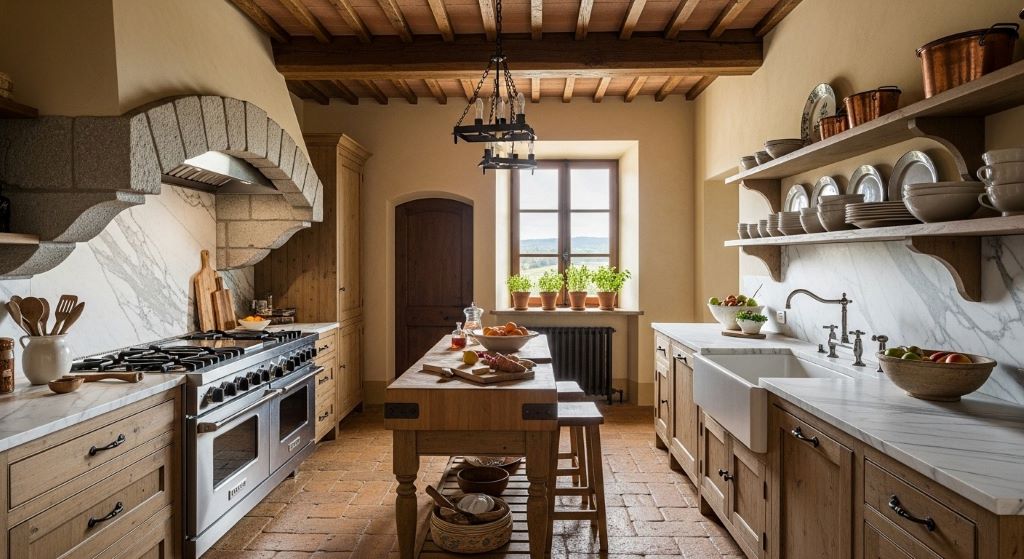
Modern Tuscan kitchens honor this heritage by incorporating both elements thoughtfully. Rough-hewn beams contrast with polished marble countertops. Distressed cabinetry pairs with gleaming copper fixtures. This intentional contrast creates visual interest and authentic character.
The philosophy emphasizes natural aging and patina rather than pristine perfection. Surfaces should tell stories of use and time. Additionally, handcrafted elements triumph over mass-produced uniformity in true Tuscan spaces.
Choosing the Right Color Palette
Tuscan color schemes draw inspiration from the Italian countryside. Warm earth tones dominate, including terracotta, ochre, burnt sienna, and golden yellow. These hues reflect sunbaked clay, wheat fields, and hillside soil.
Wall colors typically feature textured plaster in soft cream, beige, or warm white. The texture itself adds rustic character while maintaining refined elegance. Moreover, subtle color variations within single walls mimic aged plaster patina.
Accent colors come from nature’s richer tones. Deep olive green references cypress trees and grape leaves. Rusty orange mirrors terracotta roof tiles. Wine burgundy adds sophisticated depth without overwhelming spaces.
Avoid stark white or cool grays that feel too modern for Tuscan authenticity. Instead, choose whites with warm undertones like ivory or cream. Additionally, incorporate natural wood tones ranging from honey to dark walnut for warmth.
According to Architectural Digest, authentic Tuscan interiors embrace warm, sun-washed colors that create welcoming atmospheres reminiscent of Italian countryside estates.
Selecting Rustic Materials with Refined Finishes
Natural stone provides essential rustic texture in Tuscan kitchens. Travertine, limestone, and tumbled marble offer aged appearance with subtle elegance. Use these materials for flooring, backsplashes, and countertops throughout the space.
Wood brings warmth through exposed ceiling beams, island bases, and open shelving. Choose reclaimed or distressed wood showing natural imperfections. However, pair rustic wood with polished hardware and refined details for balance.
Plaster walls create textured backdrops essential to Tuscan character. Venetian plaster techniques produce subtle variations and soft sheen. This refined application of rustic material exemplifies the style’s dual nature perfectly.
Terra cotta tiles add authentic Mediterranean flavor to floors and backsplashes. Hand-painted ceramic tiles introduce artistic refinement alongside earthy clay textures. Therefore, mixing plain and decorated tiles creates visual hierarchy and interest.
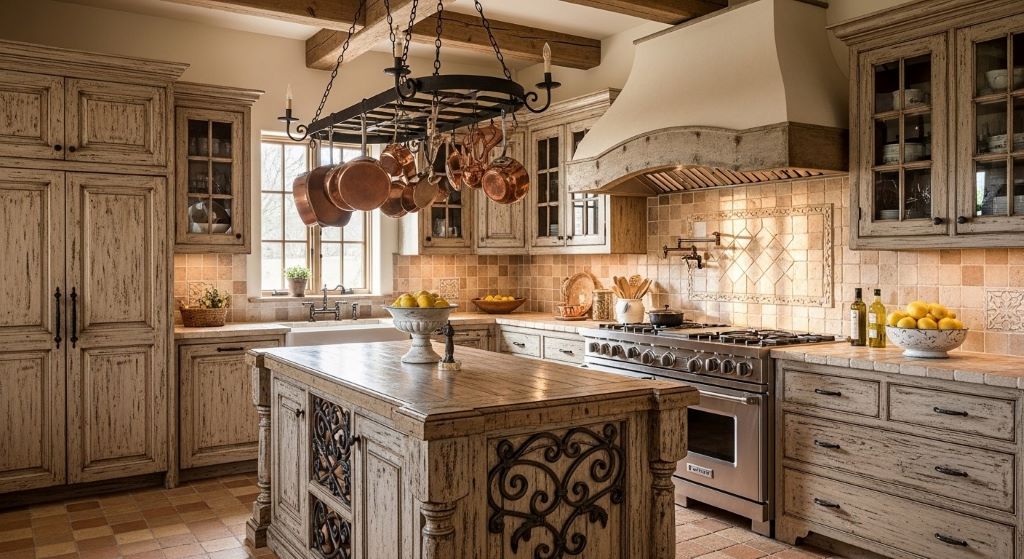
Iron and copper metals contribute both rustic and refined qualities. Wrought iron pot racks and light fixtures provide Old World charm. Meanwhile, hammered copper sinks and polished brass faucets add sophisticated gleaming accents.
Designing Cabinetry That Balances Both Aesthetics
Tuscan cabinetry favors solid wood construction with visible grain and natural variations. Cherry, walnut, and knotty alder woods suit the style authentically. Stain these woods in medium to dark tones rather than painting them.
Distressing techniques add rustic character to cabinet surfaces. Light hand-scraping, antiquing glazes, and worn edges create aged appearance. However, maintain clean lines and quality construction for refined foundation beneath rustic finishes.
Open shelving balances closed cabinetry, displaying attractive dishware and serving pieces. Thick wooden shelves supported by iron brackets feel appropriately rustic. Additionally, displaying copper pots and ceramic vessels adds both function and decoration.
Glass-front cabinet doors introduce refinement while maintaining warmth. Choose mullioned glass with wooden dividers rather than modern frameless styles. Moreover, display beautiful china and glassware to enhance sophisticated elements.
Ornate corbels and decorative moldings elevate simple cabinet boxes. Hand-carved details and applied ornaments reference Renaissance craftsmanship. Therefore, these refined touches transform basic cabinetry into statement pieces worthy of Tuscan villas.
Incorporating Authentic Architectural Elements
Exposed ceiling beams immediately establish rustic Tuscan character. Rough-hewn timbers or aged wood beams create dramatic overhead interest. Install these structurally or decoratively depending on your home’s construction and ceiling height.
Arched doorways and windows reference classical Italian architecture. Curved openings feel more refined than standard rectangular frames. Additionally, these architectural features create natural transitions between kitchen and adjoining spaces.
Stone or brick arches around ranges create focal points combining rustic materials with refined design. These range hoods become sculptural elements anchoring entire kitchens. Moreover, they provide opportunities for decorative tile work and carved details.
Thick walls and deep windowsills characteristic of stone construction add authentic dimension. Build out standard walls or create faux depth to achieve this effect. Therefore, even modern construction can reference ancient building methods visually.
Wrought iron window grilles and door hardware contribute Old World security features as decorative elements. These handcrafted metal pieces blend rustic forging techniques with refined scrollwork patterns beautifully.
Balancing Rustic Textures with Refined Surfaces
Contrasting surface textures creates the essential tension between rustic and refined. Pair rough stone walls with smooth marble countertops. Combine weathered wood beams with polished tile floors. This interplay keeps spaces visually interesting and authentically Tuscan.
Layer multiple textures within single elements for sophisticated depth. For example, tumbled marble backsplashes provide stone’s rustic appeal with refined installation patterns. Additionally, honed rather than polished marble finishes split the difference between rough and smooth.
Incorporate textiles adding softness to hard surfaces. Linen cafe curtains, woven runners, and upholstered seating introduce refined comfort. However, choose natural fibers and muted patterns maintaining rustic sensibility.
Maintain balance preventing either rustic or refined elements from overwhelming spaces. If flooring is heavily textured stone, keep walls smoother. Conversely, rough plaster walls pair beautifully with polished marble floors. Therefore, distribute textural weight thoughtfully throughout the kitchen.
According to Elle Decor, successful Tuscan interiors achieve harmony through careful balancing of rough and refined textures that complement rather than compete with each other.
Selecting Lighting Fixtures with Old World Charm
Wrought iron chandeliers provide dramatic rustic lighting centerpieces. Hand-forged designs with candle-style bulbs reference medieval lighting. However, choose fixtures with refined proportions and elegant curves rather than overly chunky pieces.
Pendant lights over islands should combine metal and glass artfully. Amber or seeded glass shades add rustic character while providing warm illumination. Additionally, hand-hammered metal finishes contribute authentic crafted appearance.
Under-cabinet lighting remains hidden, maintaining historical authenticity while providing modern function. Warm-toned LED strips illuminate work surfaces without visible contemporary fixtures. Therefore, practical lighting needs are met invisibly.
Wall sconces flanking windows or range hoods add ambient lighting with decorative impact. Choose designs incorporating both iron and glass elements. Moreover, install these at appropriate heights creating layered lighting schemes.
Natural light through generous windows remains essential to Tuscan design. Maximize daylight with minimal window treatments. Alternatively, use sheer linen panels filtering light gently while maintaining privacy and refined appearance.
Choosing Appliances That Disappear or Make Statements
Modern appliances present challenges in historically inspired kitchens. Panel-ready refrigerators and dishwashers hide behind cabinet fronts maintaining rustic aesthetic. This integration allows contemporary function without visual disruption.
Ranges offer opportunities for statement-making. Professional-style ranges in bold colors like cobalt blue or deep red become focal points. However, choose models with classic styling rather than ultra-modern designs for better style cohesion.
Range hoods deserve special attention as prominent features. Custom stone, plaster, or wood hoods disguise mechanical ventilation beautifully. Additionally, these substantial hoods create architectural presence anchoring entire kitchens.
Display smaller appliances selectively based on appearance. Copper kettles and handsome coffee makers enhance Tuscan character. Conversely, store plastic appliances inside cabinets preserving authentic ambiance.
Stainless steel, while modern, can work if used sparingly and paired with warm materials. Brushed finishes feel less contemporary than polished. Therefore, balance any stainless elements with abundant wood, stone, and iron throughout the space.
Adding Refined Details Through Decorative Accents
Hand-painted ceramic tiles introduce artistic refinement to rustic stone or plaster backgrounds. Use decorative tiles sparingly as accents rather than covering entire surfaces. Place them strategically behind ranges or framing windows for maximum impact.
Tuscan pottery and ceramics displayed on open shelves serve both decorative and functional purposes. Olive oil dispensers, fruit bowls, and serving platters add authentic regional character. Additionally, these pieces introduce varied colors and patterns naturally.
Fresh herbs growing in terracotta pots bring life and fragrance to windowsills. This practical tradition connects kitchens to gardens and countryside. Moreover, growing herbs reflects the Tuscan emphasis on fresh, local ingredients.
Copper cookware hanging from ceiling racks provides rustic texture with refined gleaming surfaces. Well-maintained copper develops beautiful patina over time. Therefore, these functional items become increasingly beautiful with use.
Woven baskets, wooden cutting boards, and linen towels add layers of natural texture. Display these everyday items thoughtfully rather than hiding them away. However, maintain organization preventing rustic charm from becoming cluttered chaos.
Creating Gathering Spaces Within Tuscan Kitchens
Large farmhouse tables anchor Tuscan kitchens as central gathering spots. Solid wood tables with turned legs and distressed finishes seat family and guests comfortably. Additionally, these tables serve multiple purposes from food preparation to casual dining.
Kitchen islands provide additional workspace and informal seating. Design islands with furniture-like details rather than plain cabinet boxes. Include turned legs, corbels, and contrasting countertops creating refined focal points.
Comfortable seating invites lingering over meals and conversation. Upholstered chairs with wooden frames blend rustic structure with refined comfort. Alternatively, simple wooden benches maintain casual farmhouse character while accommodating flexible seating numbers.
Built-in banquettes maximize seating in available space efficiently. Cushioned bench seating with storage underneath combines practicality with comfort. Moreover, surrounding banquettes with windows creates cozy breakfast nooks bathed in natural light.
Wine storage reflects Italian appreciation for viticulture and hospitality. Built-in wine racks, small wine refrigerators, or decorative bottle displays acknowledge this cultural priority. Therefore, incorporating wine storage feels authentically Tuscan while remaining functionally relevant.
Maintaining Authenticity While Adding Modern Conveniences
Hidden modern conveniences preserve historical aesthetics while providing contemporary function. Outlets placed inside drawers or cabinet interiors keep technology accessible but invisible. Additionally, pop-up electrical strips maintain clean countertops when not in use.
Smart home technology should remain completely hidden in Tuscan kitchens. Voice-activated controls and smartphone apps provide modern control without visible contemporary devices. Therefore, technology enhances without compromising authentic character.
Touchless faucets can incorporate into traditional-looking fixtures. Choose designs with classic proportions and finishes like oil-rubbed bronze or copper. Moreover, select models where sensors integrate invisibly into traditional styling.
Modern organizational systems hide inside traditional cabinetry. Pull-out shelves, drawer dividers, and specialized storage maximize efficiency invisibly. However, cabinet exteriors maintain period-appropriate appearance and hardware.
Energy-efficient appliances and LED lighting provide sustainability without sacrificing style. Choose efficient models based primarily on aesthetic compatibility. Additionally, many contemporary technologies now come in designs suitable for traditional kitchens.
Conclusion
Tuscan kitchen design successfully blends rustic and refined elements through thoughtful material selection and balanced composition. Natural stone, aged wood, and textured plaster provide authentic rustic foundation. Meanwhile, polished surfaces, ornate details, and quality craftsmanship introduce sophisticated refinement. The key lies in honoring both aspects equally, allowing neither to dominate completely. Therefore, successful Tuscan kitchens feel simultaneously casual and elegant, welcoming and impressive. By understanding this essential duality and applying it consistently throughout design decisions, homeowners create timeless kitchens capturing true Italian countryside spirit. The investment in quality materials and authentic details creates spaces that age beautifully, becoming more characterful over time.
Frequently Asked Questions
What defines Tuscan kitchen design style?
Tuscan kitchen design combines rustic Italian countryside elements like exposed beams, stone, and distressed wood with refined details including marble countertops, ornate ironwork, and hand-painted tiles. The style emphasizes warm earth tones, natural materials, and Old World craftsmanship creating both casual and elegant atmospheres.
Can Tuscan design work in modern homes?
Yes, Tuscan design adapts to modern construction through architectural additions like faux beams, textured wall treatments, and appropriate material choices. Focus on authentic materials and finishes rather than structural changes. Additionally, hiding modern appliances and technology maintains historical authenticity in contemporary spaces.
What colors are essential for Tuscan kitchens?
Essential Tuscan colors include warm earth tones like terracotta, ochre, burnt sienna, golden yellow, and creamy beige. Accent colors include deep olive green, rusty orange, and wine burgundy. Avoid cool grays and stark whites, choosing instead warm-toned neutrals reflecting sun-washed Italian countryside.
How much does a Tuscan kitchen renovation cost?
Tuscan kitchen renovations typically cost more than standard remodels due to quality materials and custom details. Expect $75-150 per square foot for authentic stone, solid wood cabinetry, and handcrafted elements. However, costs vary significantly based on material quality, custom work, and regional labor rates.
What flooring works best in Tuscan kitchens?
Natural stone like travertine, limestone, or tumbled marble provides authentic Tuscan flooring. Terra cotta tiles offer traditional Mediterranean character. Alternatively, wide-plank distressed hardwood creates warmth. Avoid contemporary materials like polished porcelain or laminate that conflict with rustic-refined aesthetic.
Related Topics:
Lacquered Brass Countertops & Backsplash: Pros and Cons You Should Know







Post Comment